
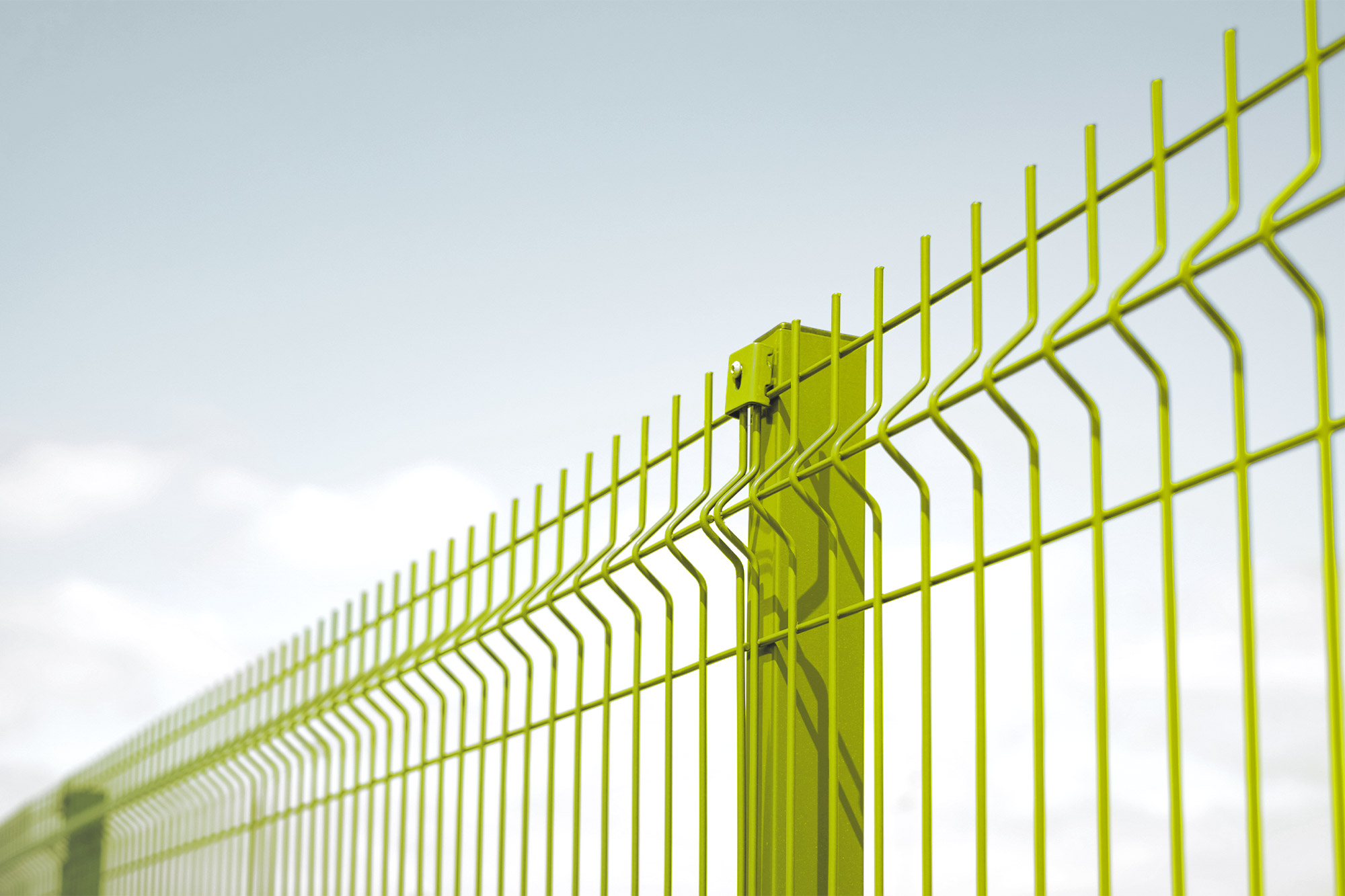

Mesh connectors join two double-wire mesh panels at the joint so that the mesh pitch runs on. Front plate and counter plate in stainless steel 1.4301, from stock in Germany for pitches of 35 mm (FC004) and 50 mm (FC005); the 25 mm version (FC003) on request. For panel-to-post connections see mat clamps.

PANEL CONNECTOR FC004 counter plate, stainless steel 1.4301
For connecting fence panels with mesh pitch 35 mm The square hole in the front plate prevents the carriage bolt from turning The slotted hole in the counter plate ensures easy positioning For assembly with square-neck carriage bolts DIN 603 M8 Stainless steel 1.4301
Content: 1 piece (€1,369.595000 / 1000 piece)
PANEL CONNECTOR FC004 front plate, stainless steel 1.4301
For connecting fence panels with mesh pitch 35 mm The square hole in the front plate prevents the carriage bolt from turning The slotted hole in the counter plate ensures easy positioning For assembly with square-neck carriage bolts DIN 603 M8 Stainless steel 1.4301
Content: 1 piece (€1,369.595000 / 1000 piece)

PANEL CONNECTOR FC005 counter plate, stainless steel 1.4301
For connecting fence panels with mesh pitch 50 mm The square hole in the front plate prevents the carriage bolt from turning The slotted hole in the counter plate ensures easy positioning For assembly with square-neck carriage bolts DIN 603 M8 Stainless steel 1.4301
Content: 1 piece (€1,493.252000 / 1000 piece)
PANEL CONNECTOR FC005 front plate, stainless steel 1.4301
For connecting fence panels with mesh pitch 50 mm The square hole in the front plate prevents the carriage bolt from turning The slotted hole in the counter plate ensures easy positioning For assembly with square-neck carriage bolts DIN 603 M8 Stainless steel 1.4301
Content: 1 piece (€1,493.252000 / 1000 piece)
Front plate and counter plate are ordered separately
One connection needs both. They are listed as separate articles, so a complete joint means two items — worth checking before a bulk order.
The bolt belongs to it
The plates are designed for a carriage bolt with a square neck, DIN 603 M8. The square neck sits in the square hole of the front plate and keeps the bolt from turning while the nut is tightened.
Panel types
The connectors suit the common double-wire panels with 6/5/6 and 8/6/8 wire diameters. Installation steps for the whole fence are shown in the guide fixing welded wire mesh fence panels.
Related: mat clamps · fence post brackets
Frequently asked questions
What is a mesh connector needed for?
Where two double-wire mesh panels meet, the mesh pitch would otherwise jump. The mesh connector holds both panel ends so that the pitch continues across the joint – the fence looks continuous and the joint is not the weak point.
What is the difference between front plate and counter plate?
The front plate has a square hole that holds the carriage bolt so it does not turn while being tightened. The counter plate has a slot and can therefore be aligned before final tightening. Both plates are required for one connection.
Which mesh pitches are available?
In stock for pitches of 35 mm (FC004) and 50 mm (FC005), each as front and counter plate in stainless steel 1.4301. The version for 25 mm (FC003) is available on request.
How is the mesh pitch determined?
Measure the spacing of the vertical wires of the installed panel, not the mesh aperture. A connector with the wrong pitch will not fit – when in doubt, measure at the fence.